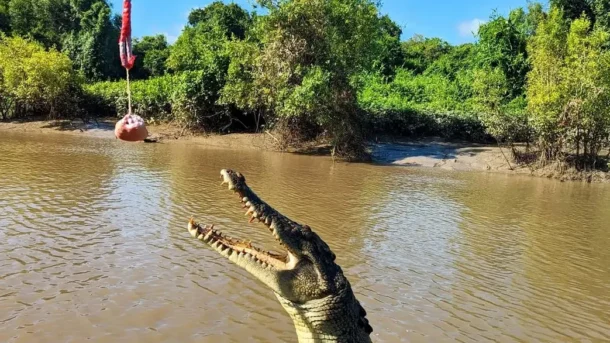
Do Croc Cruises feed them to make them jump — and is it legal? When I first did a Jumping Crocodile Cruise on the Adelaide River, I wondered the same thing. What I found was part wildlife show, part Territory education and a fascinating insight into how the NT balances thrill-seeking tourism with responsible crocodile management. You’ve seen the photos — massive saltwater crocodiles leaping clean out of the water, jaws snapping mid-air beside wide-eyed tourists.
I’m Paul Beames, founder of Get Lost Travel Group, and I’ve spent more dry seasons than I can count knocking around croc country. From the Mary River wetlands to Shady Camp crossings, I’ve seen everything from rogue bull crocs to nesting crocodile eggs on the banks. Here’s the real story behind those dramatic jumps — the science, the laws and the ethics of it all.
How Croc Tours Really Operate in the NT
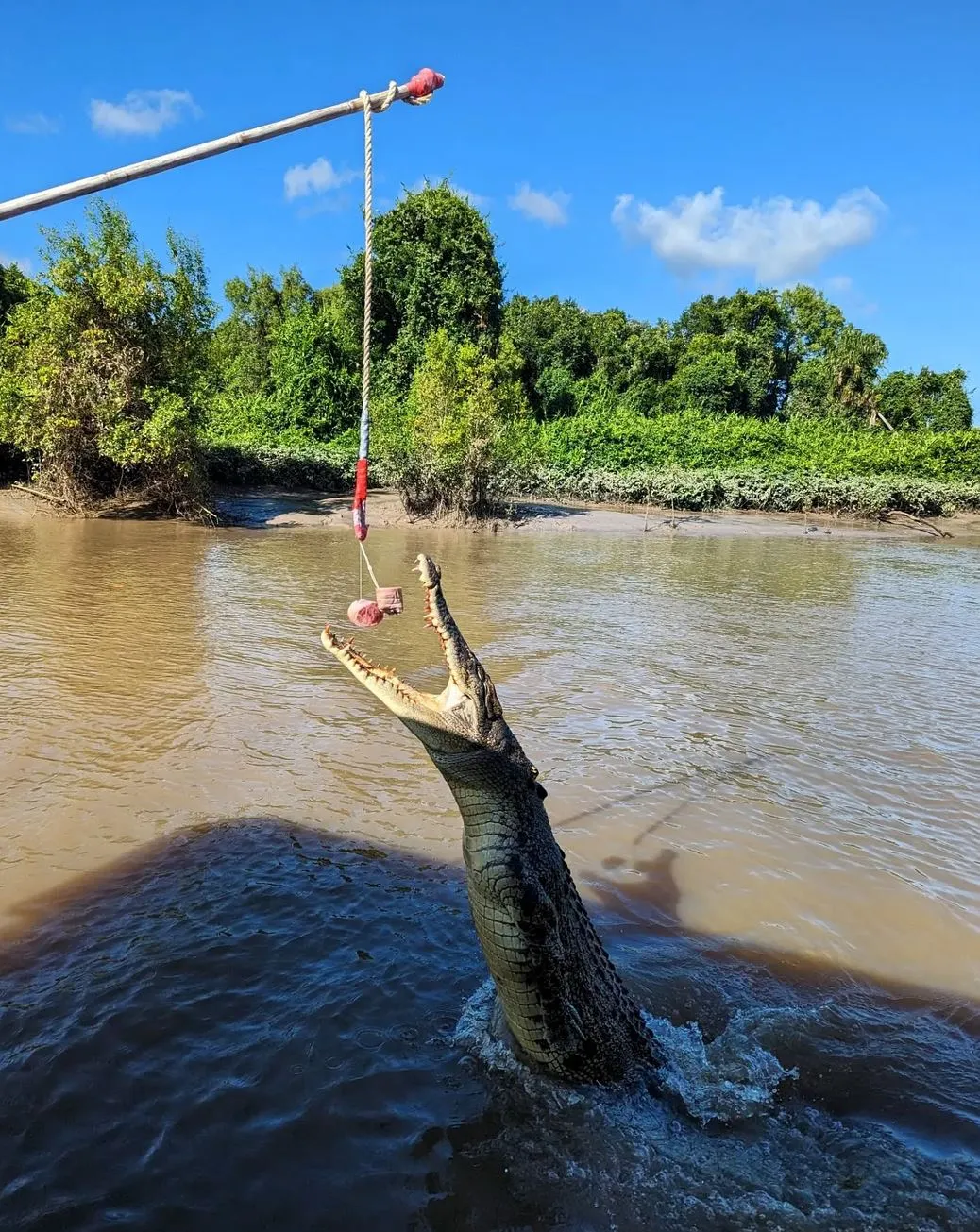
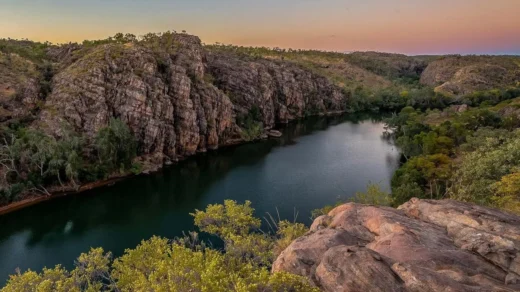
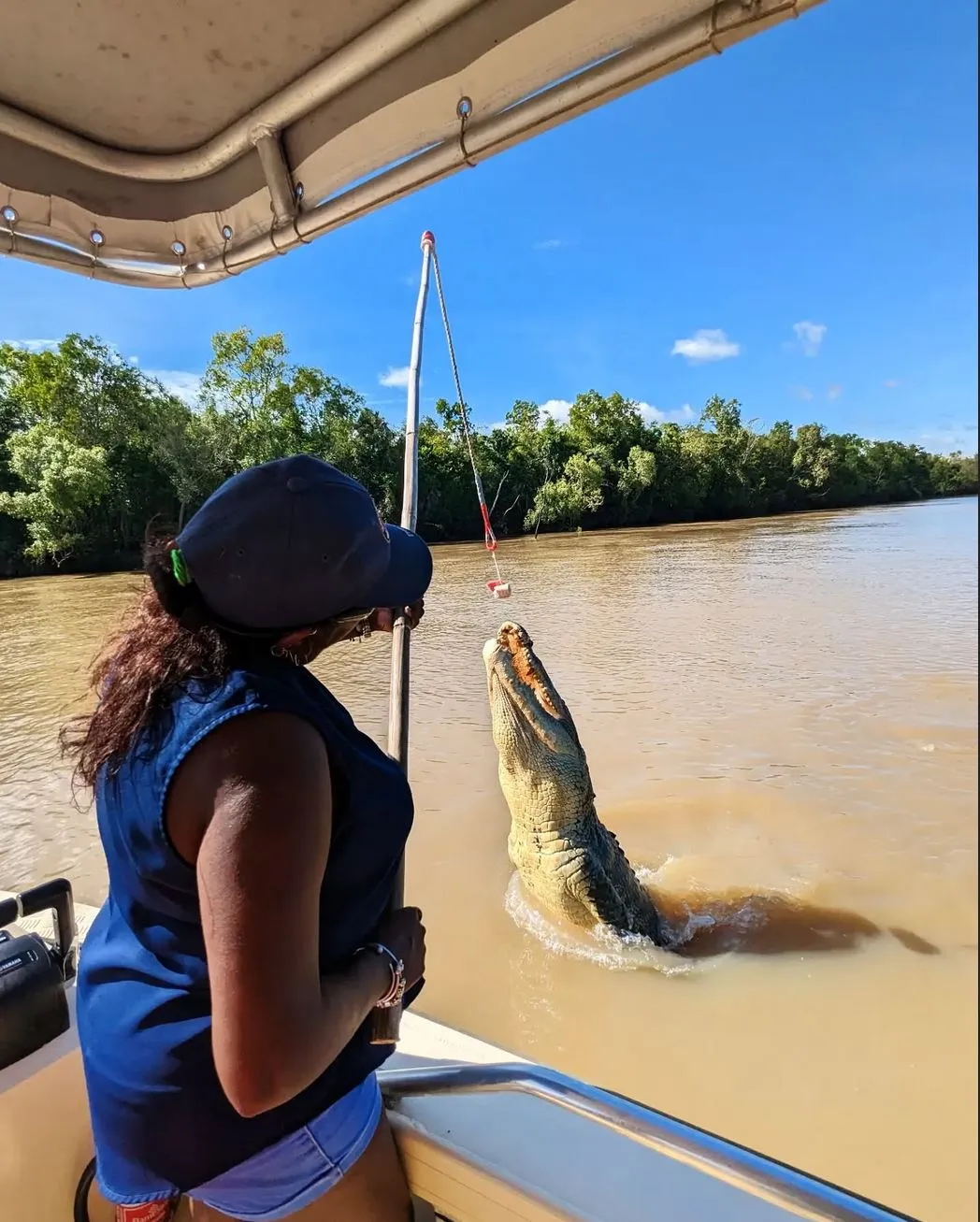
Most Jumping Crocodile Cruise tours take place on the Adelaide River — one of the NT’s most crocodile-infested waters, about an hour’s drive east of Darwin. These tour boats are low and sturdy, giving you a front row seat to nature’s oldest predator in action.
Now, let’s get it out of the way: yes, they use bait — but no, they’re not feeding crocodiles like you might think. Operators tie small chunks of buffalo or pig meat to long poles, lift them away before the croc gets a proper feed. It’s a behavioural trigger, not a buffet. The point is to show how a saltwater crocodile uses its tail to jump — a movement that mimics its natural hunting behaviour.
Each operator must have a Commercial Wildlife Interaction Licence from NT Parks and Wildlife. This keeps the activity within safe and ethical boundaries. The same rules apply to every legitimate Jumping Crocodile Cruise — from how much bait they use to how close they can get to the animals.
Croc Jumping Basics
| Practice | Description | Legal? | Purpose |
|---|---|---|---|
| Small bait on poles | Used to trigger the natural jumping reflex | ✅ Legal (with licence) | Education and demonstration |
| Feeding on large carcasses | Full or frequent feeding | ❌ Illegal | Classified as wildlife interference |
| Watching without bait | Passive viewing | ✅ Legal | Low-impact observation |
According to NT authorities, there are only a handful of licensed jumping croc operators. This ensures compliance and reduces crocodile attack risk from illegal or unregulated feeding. It’s one of the many ways the NT’s crocodile conservation program protects both wildlife and people.
The Science Behind the Jump
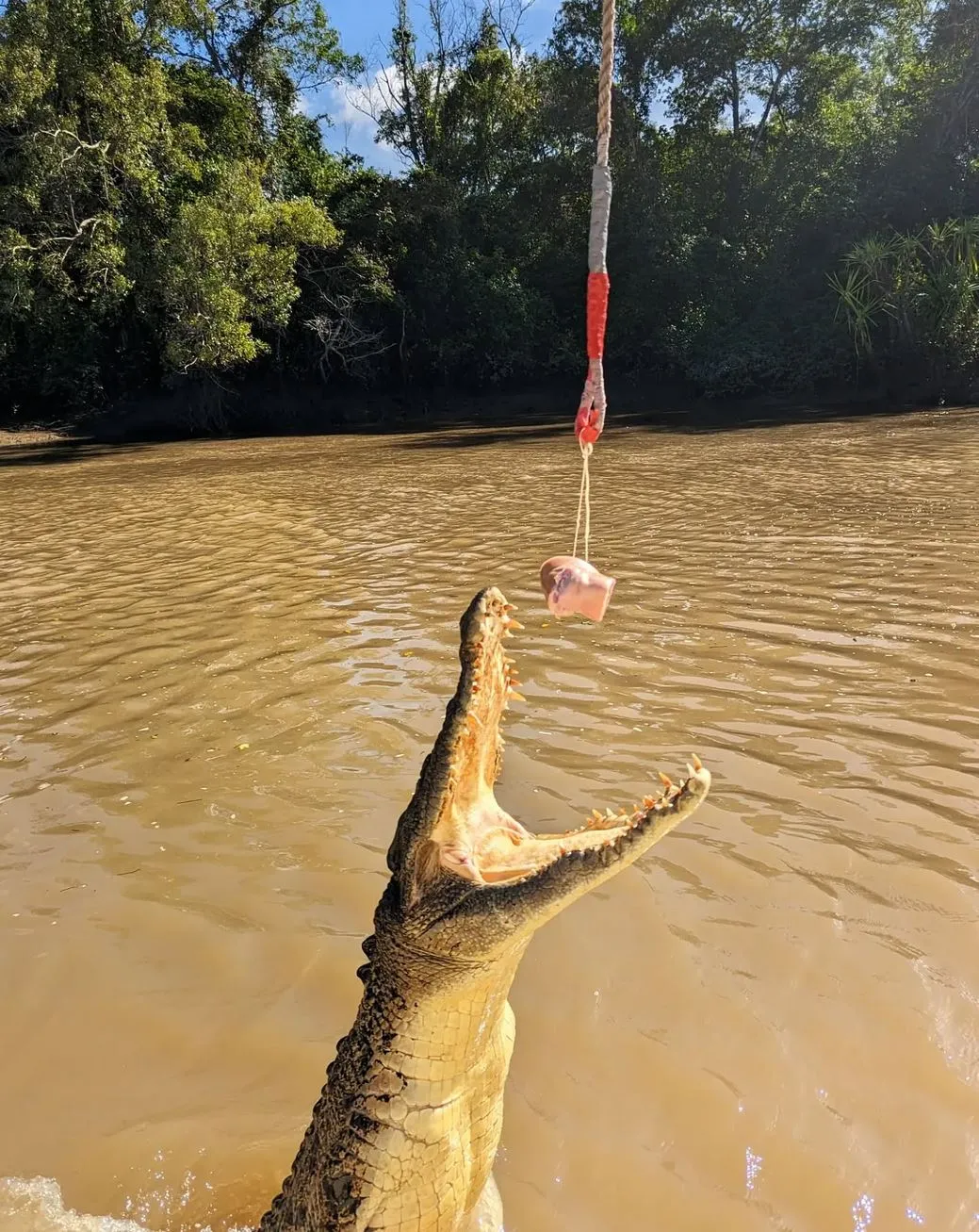
Crocodiles don’t jump for applause. That explosive movement is a natural hunting technique used to catch birds, bats and wallabies perched above the waterline. Studies from Charles Darwin University show crocs can achieve up to 12km/h of vertical lift using only muscle power.
I’ve stood on a Jumping Crocodile Cruise deck and watched a 5m male rise almost half his body length above the surface. The sound alone – the deep thud of muscle and water – is unforgettable. The bait doesn’t “train” them to jump; it just replicates the motion they already use in the wild.
When scientists examined licensed tour zones, they found minimal behavioural change in crocs exposed to limited demonstrations. Unlicensed feeding near croc-infested waters often leads to aggression and increased crocodile attack risk. That’s why there are strict guidelines – to keep curiosity from turning into chaos.
What the Law Actually Says
In the NT, feeding crocodiles is illegal unless you’re a licensed operator. The Territory Parks and Wildlife Conservation Act 1976 says you can be fined up to $77,000 for luring or feeding wild crocs.
But Jumping Crocodile Cruise operators are under special wildlife interaction permits. This outlines:
- Bait size limits (under 500g per session)
- Frequency caps on demonstrations
- Safe vessel distance rules
- Mandatory training for guides
It works. It’s not just about safety for tourists – it’s also about preserving the wild instincts of the saltwater crocodile. Every baited jump is logged, reviewed and monitored by NT Parks and Wildlife as part of ongoing crocodile conservation.
Across the Top End, around 250 “problem” crocs are trapped and relocated each year – often those that wander too close to urban areas. It’s a practical balance between conservation and human safety.
From Crocodile Hunters to Croc Custodians
In the 1950s and ’60s, professional crocodile hunters roamed these same rivers with rifles, not cameras. Crocodile skins were worth a fortune, and by 1971, the saltwater species was nearly wiped out. Numbers dropped to under 5,000, and a total hunting ban was put in place.
Fast forward to today: thanks to decades of crocodile conservation and management, the NT is home to over 100,000 wild salties. It’s one of the most successful wildlife recoveries in the world.
Sustainable practices like controlled crocodile egg collection now support both conservation and Indigenous-owned farms, creating local jobs and keeping the ecosystem balanced. The NT’s approach has turned a former hunting ground into a model for wildlife coexistence.
And yes — it’s also made possible the modern Jumping Crocodile Cruise, which now educates visitors about that journey from exploitation to protection.
Ethics and Education on the Water
Critics say croc-jumping tours still interfere with wild behaviour, but I say that depends on the operator. A good Jumping Crocodile Cruise doesn’t just show you a leaping croc — it tells you the story of survival behind it.
Top-end guides talk about species differences, conservation wins and the science of crocodile management. You’ll learn how to tell a territorial male from a nesting female and why crocs guard their eggs with such precision. That’s knowledge that stays with you long after the splash.
A 2023 NT Tourism report showed that croc tourism brings in over $50 million annually, supporting dozens of professional tour companies in rural communities. That kind of income helps fund research and maintain the education programs that make visitors more croc-wise — a win for both people and predators.
When booking, look for operators who:
- Display a visible NT Parks & Wildlife Wildlife Interaction Licence
- Limit baiting to a few demonstrations per cruise
- Don’t overcrowd the boats
- Invest in crocodile conservation or research programs
Croc-Wise Safety: What Every Traveller Should Know
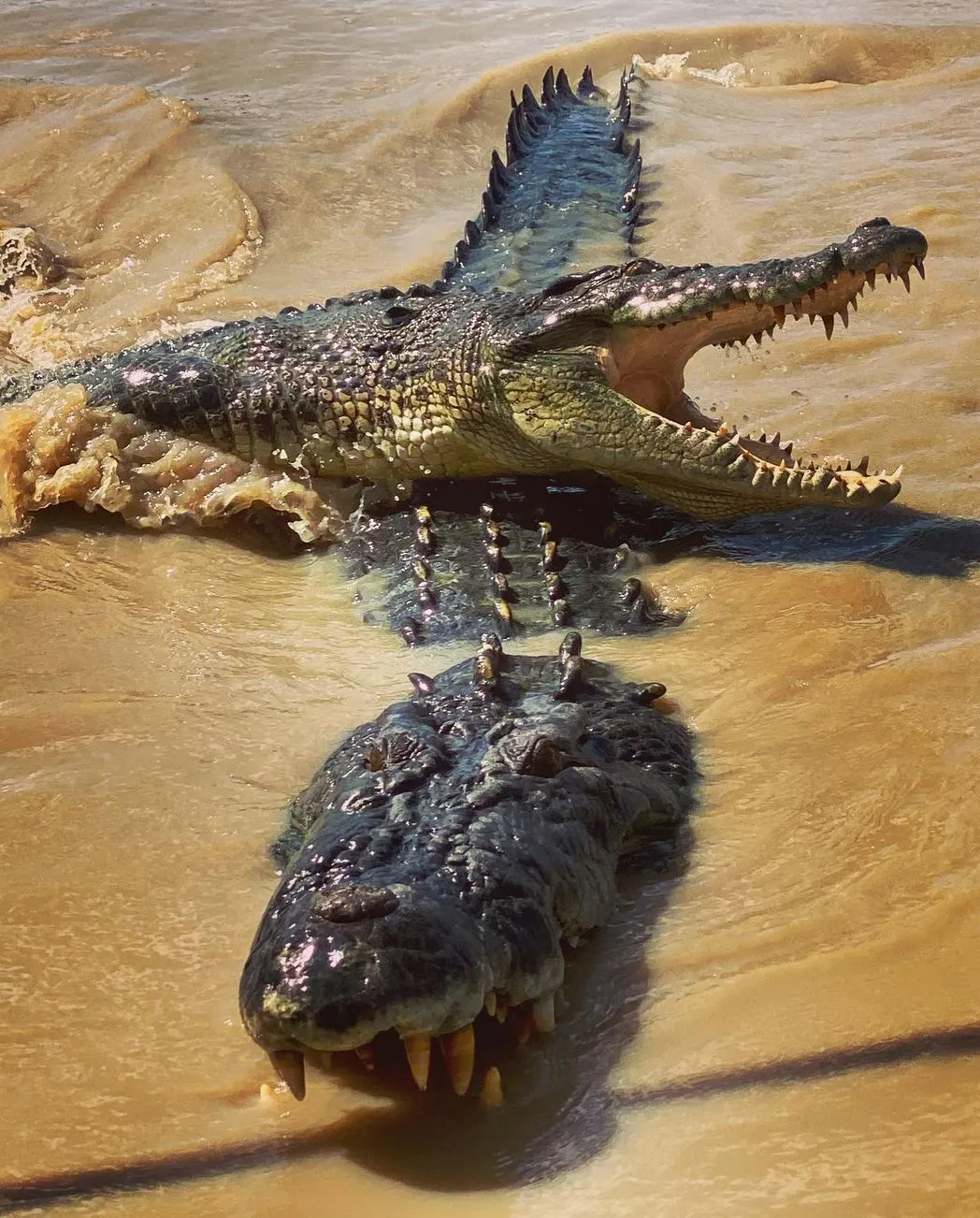
If you’re heading north for your first Jumping Crocodile Cruise, you’re in for a show — but it’s no circus. These rivers are wild, unpredictable and entirely under croc control. Respect that and you’ll be safe.
Croc-Wise Travel Checklist
- Follow every guide instruction (they know the crocs personally).
- Keep limbs, drones and cameras inside the boat.
- Never swim in crocodile-inhabited waters, no matter how calm they look.
- Don’t fish or camp near murky banks.
- Stick to reputable tour boats — not backyard imitators.
During the wet season (Nov–Apr), the rivers swell, crocs spread out and visibility drops. The dry season (May–Oct) is better for croc-spotting tours — clear skies, stable waters and more predictable croc behaviour.
Why the Croc Show Still Matters
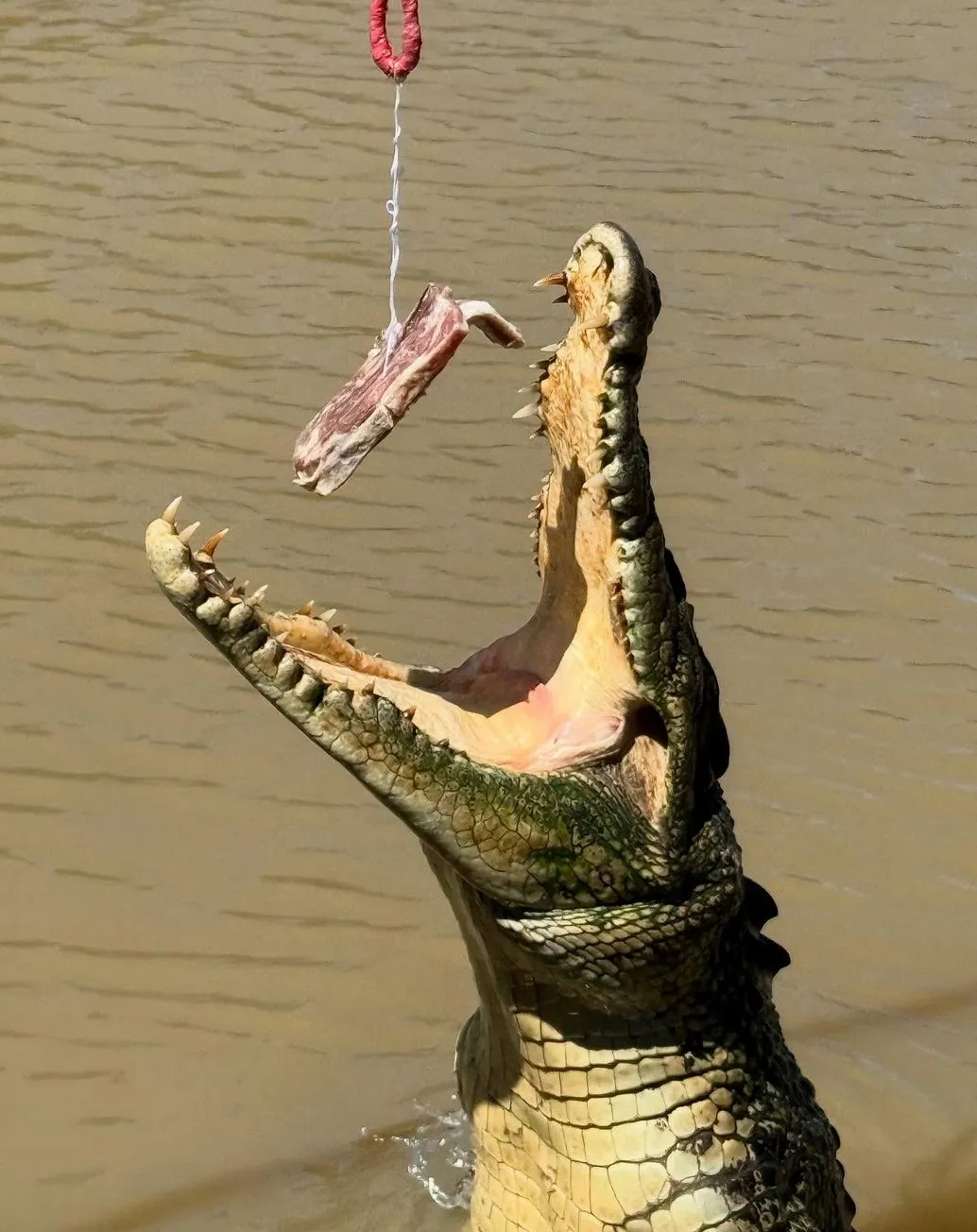
Jumping croc tours are pure Top End theatre — but they’re also powerful tools for understanding crocodile species survival. Seeing a 5-metre male rocket out of the river isn’t just a thrill — it’s a reminder that these creatures have ruled this continent for over 200 million years. A good Jumping Crocodile Cruise will give you a deeper understanding of what it means to share the land (and water) with apex predators. It shows that with good crocodile management, tourism and conservation can actually work together.
I’ve been watching these big fella’s for years, and the feeling never gets old — part awe, part fear, all respect. That’s the Top End for you.
The Lowdown
Croc-jumping tours – these aren’t about trying to provoke the crocs – they’re about showing some respect and understanding for these incredible animals and also doing it all in a way that’s totally safe. The Jumping Crocodile Cruise experience is a great example of how NT has got crocodile management spot on and their world-leading approach to protecting these wonderful creatures.
So, if you’re planning a trip up north, grab a hat, charge up the camera and get a load of these prehistoric powerhouses for yourself. Just remember, in crocodile country – we’re the visitors.
Got any questions about croc safety or the best time to go cruising? Leave a comment below – I’m always happy to share some of my experiences from the field with Get Lost Travel.
Feeding crocodiles without a licence is against the law, and if you get caught, there are serious consequences.
FAQ
Do croc cruises give the crocs food to get them to jump around?
No, the licensed guys use tiny bits of bait to get the crocs to jump naturally, not exactly the sort of feeding people think of. And the NT Parks and Wildlife are all over this to make sure it’s done the right way.
Is it allowed to feed wild crocs in the NT?
No way. Feeding crocodiles without a licence is against the law, and if you get caught, there are serious consequences. The only ones who are allowed to do it are the Jumping Crocodile Cruise operators, and they’re only allowed to do it under strict permits.
How many people get killed by crocs every year?
In the NT, it’s usually just one or two people a year who get killed by crocs, and usually it’s because they either got into some unregulated waters or ignored the safety warnings.
What’s the safest way to see wild crocs?
Just book a Jumping Crocodile Cruise or one of the other licensed tours with a proper guide who knows what they’re doing. These tours follow all the safety protocols and help out with crocodile conservation.
Do croc tours mess with the natural behaviour?
Studies show that if you do it the right way, with proper permits and all, then the impact on the crocs is minimal. The problem starts when people go and feed them without a licence – that’s when you get crocs everywhere, and it becomes a risk to both humans and animals.